
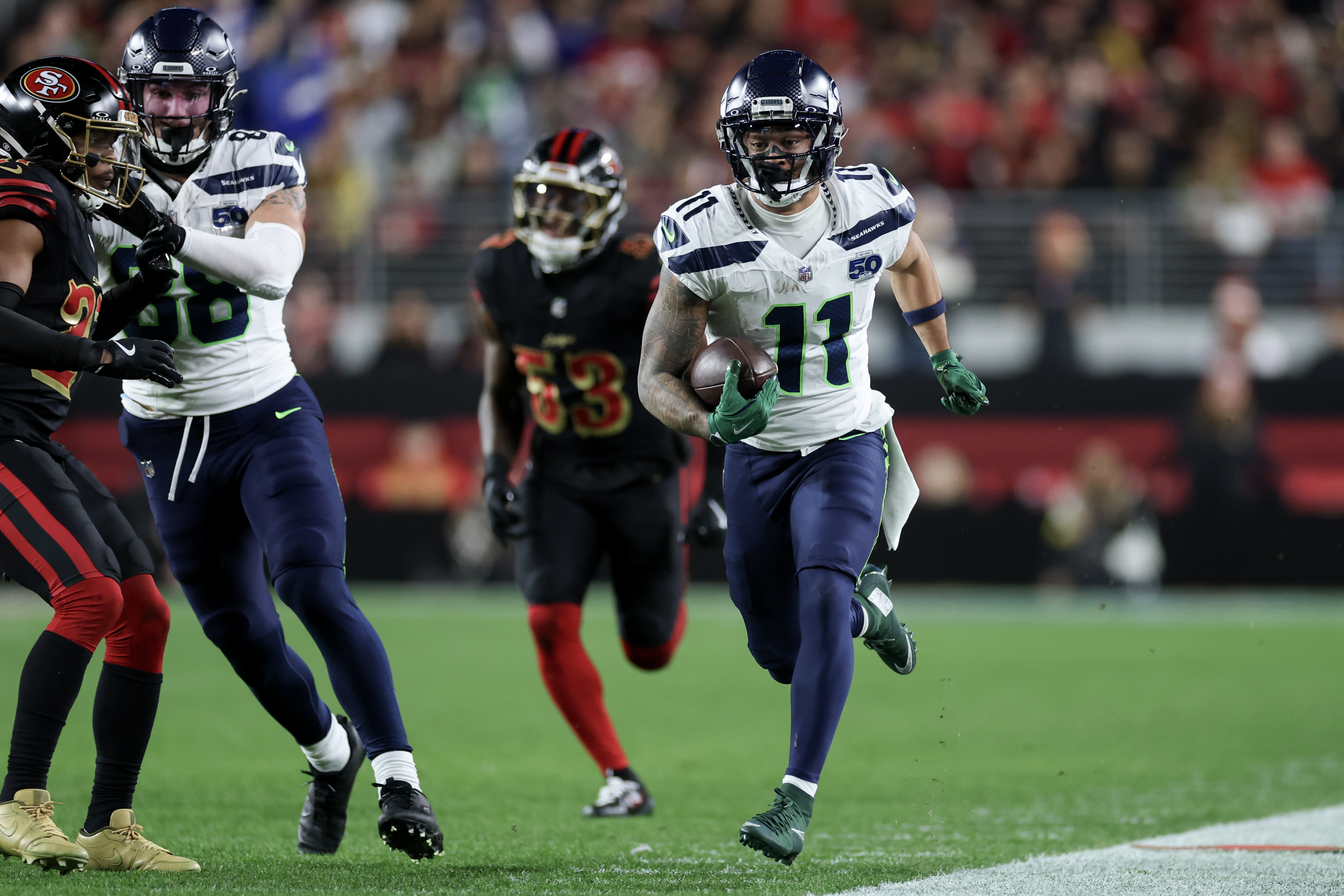
The regular season is over, and the San Francisco 49ers will be the No. 6 seed in the NFC after losing a tough game to the Seattle Seahawks on Saturday, with the NFC West title and the No. 1 seed on the line.
After an improbable run, which included a six-game win streak and some outside luck, the 49ers had a huge chance to boost their playoff odds with the regular-season finale against Seattle, but it was going to be a tough matchup that required a lot to go well.
In the end, San Francisco’s offense was shut down, the defense had a couple too many issues, and the game was not nearly as close as the 13-3 final score indicated.
Here are three quick takeaways from the 49ers 13-3 loss to the Seahawks on Saturday.
Offense can’t deliver when needed
The 49ers offense has been the story of the second half, as they were averaging 35.5 points per game since Brock Purdy’s return, which was the most of any team in the NFL during that stretch.
For the 49ers to win, their offense was going to have to score points to overcome the defensive mishaps, and they just couldn’t. Without Trent Williams, the 49ers just couldn’t run the ball and had to go away from it really early in the game because the early-down rushes were just too inefficient.
San Francisco ran the ball just eight times with its running backs, as opposed to 32 dropbacks, and you can rarely ever be effective offensively with that big of a disparity. I didn’t think Austen Pleasants, Trent Williams’s backup, did a bad job by any means, but the run game is different when the latter is in the ballgame.
Seattle clearly felt confident it could defend the run with its front at a high level, playing exclusively in nickel to take away the 49ers’ explosive pass game, which worked to fruition. The 49ers were also beat at the line of scrimmage offensively, which I said was the biggest matchup to watch and the ultimate reason why I picked Seattle to win.
Without Williams, and maybe even with him, it was going to be a difficult, difficult challenge to contain such a talented Seahawks offensive line. Brock Purdy faced quite a bit of pressure, which altered his decision-making and led to a number of tough plays. And, of course, we saw the lack of movement in the run game as well.
On that note, one of my keys revolved around the 49ers quarterback, as he was going to have to find a way to elevate this team with how San Francisco’s defense was playing against a really tough Seattle defense. Purdy just couldn’t do that enough on Saturday. The Seahawks bottled up the passing game without Ricky Pearsall, and Purdy averaged just 4.7 yards per carry. He also had a brutal interception at a key point in the fourth quarter when a Christian McCaffrey bobble went to the opposite team.
I also pointed out the red zone as a huge key, given how well the 49ers played in that area over the last few weeks since Purdy’s return. Well, the 49ers had just one red zone attempt on the day, which can’t happen with this offense. And they had the interception on that possession. A touchdown there makes it a three-point game and gives the 49ers a chance, but the turnover essentially sealed the deal.
Defense
This game was going to be about how San Francisco’s offense could handle Seattle’s defense, but the other side of the ball wasn’t pretty either.
The 49ers defense got dominated in the first half, with a couple Sam Darnold mistakes being the key reason they were still in a close game at halftime. Seattle marched down the field for 66 yards on a 12-play drive to open the game, but fell short on a turnover on downs near the goal-line.
They got an easy three-play, 35-yard touchdown drive with a short field on their next drive and ate up clock with a 10-play, 53-yard drive after that, which got them into field goal range, but Jason Myers missed a 47-yarder.
Seattle had another long nine-play scoring drive after that to cap the half. They should’ve had a lot more than 13 points at halftime, as the 49ers defense just didn’t have much resistance on the ground.
In the second half, after forcing a punt, the 49ers allowed 11-play and 18-play drives that ate up over 13 minutes of clock and took away offensive opportunities for the 49ers. The last one was especially brutal, as the 49ers didn’t have much of a chance to come back down two scores with just 2:20 remaining.
Seattle had 180 rushing yards on 4.6 yards per attempt. They doubled San Francisco’s yards. The saving grace was the 0 of 3 in the red zone for touchdowns.
Too many flaws?
This changes a ton for the 49ers, who will travel to face the Philadelphia Eagles next weekend on Sunday as the No. 6 seed.
This game was going to be hard, but the 49ers just didn’t look on the same level as the Eagles in the loss, and the team’s flaws showed out quite a bit.
Offensively, they badly need to get healthy with Ricky Pearsall and Trent Williams both missing Week 18. They need to be more consistent with the run game after doing well there the last few weeks. And they’ve got to find a way to create explosives against tough defenses.
Defensively, the 49ers need to find a way to just maintain teams from scoring. It’s going the be the offense leading the way, but there needs to be something better in the run game defensively, especially facing some strong rushing teams with good offensive lines soon.
Having a bye week and allowing more time to get healthy while being at home masks some of the flaws. But, with the circumstances changing, there just may be too many questions for the 49ers heading into wildcard weekend.
About the Author: Insidethe49
